
Bhausaheb Fundkar Government College of Agriculture, Buldhana is established by Government of Maharashtra in the year 2023 of July 13th is committed to excellence in agricultural education, research, extension, and rural development.
The college is affiliated with Dr. Panjabrao Deshmukh Krishi Vidyapeeth and follows the academic curriculum prescribed by the university and the Indian Council of Agricultural Research. Since its establishment, the college has focused on imparting scientific knowledge, practical training, and entrepreneurial skills to students while contributing to sustainable agricultural development in the region.
About College
Location The college is situated in Buldhana, an agriculturally important district in the western part of the Vidarbha region. The district is known for the cultivation of Cotton, Soybean, Pigeon pea, Wheat, Sorghum, and various horticultural crops. Buldhana district lies between approximately 19°51′ and 21°17′ North latitude and 75°57′ and 76°59′ East longitude. The district covers an area of about 9,661 square kilometres and is well connected through state highways and nearby railway stations. The college provides easy access to students from Buldhana and neighbouring districts. The campus offers a conducive environment for agricultural education with instructional farms, laboratories, classrooms, and student support facilities designed to promote experiential learning and research activities. | | |
 | Vision To emerge as a centre of excellence in agricultural education, research, innovation, and extension for sustainable agricultural growth and farmer prosperity. |
Academic Programmes: Undergraduate Programme
B.Sc. (Hons.) Agriculture
Eligibility for the course is XII standard science passed in 10+2 pattern from Maharashtra State Board of Higher Secondary Education or equivalent examination with Physics, Chemistry, Biology and English, with optional subject Mathematics. Presently, the intake capacity of the UG programme is 60. The admission to this UG degree programmes will be through CET conducted by Common Entrance Test Cell, Maharashtra State (MH-CET or JEE or any other equivalent examination as decided by State CET cell or competent authority).
The VI (Sixth) Deans’ Committee syllabus is the most recent, modernized curriculum for agricultural undergraduate degrees in India. It aligns with the National Education Policy (NEP) 2020, establishing a uniform academic standard across State Agricultural Universities (SAUs) and ICAR-accredited institutions. The B.Sc. (Hons) Agriculture program is a 4-year (8-semester) professional degree requiring a total of 167 to 177 credits. It introduces a flexible credit framework, modernizes core subjects like AI and natural farming, and provides multiple entry/exit options, ensuring graduates are equipped for contemporary challenges, also allowing students to earn a Certificate after one year, a Diploma after two years, or a full degree after four years. Incorporates coursework aimed at building professional skills, communication, and basic business acumen to encourage agritech startups. In this curriculum includes Common courses, New age courses, Online/ MOOC courses, Elective courses, Internship, Project & Skill enhancement courses to bridge the gap between academic theory and practical field execution.
The programme offers comprehensive education under following disciplines/ sections :
| Agronomy | Crop production technologies, sustainable farming systems, and resource management. |
| Soil Science and Agricultural Chemistry | Soil fertility management, soil health assessment, and nutrient management. |
| Horticulture | Fruit science, vegetable science, floriculture, landscaping, and protected cultivation. |
| Agricultural Botany | Crop plants, genetics, plant breeding, seed science, plant physiology, and biotechnology, which are essential for improving agricultural productivity and sustainability. |
| Plant Pathology | Identification and management of plant diseases. |
| Agricultural Entomology | Insect pest management and integrated pest management (IPM). |
| Agricultural Extension Education | Farmers psychology, Promotes farmer education, communication technologies, transfer of technology and rural development. |
| Agricultural Economics | Agricultural marketing, agribusiness management, and farm economics. |
| Animal Husbandry & Dairy Science | Livestock production, breeding, nutrition, health care, and dairy management. |
| Agricultural Engineering | Farm machinery, irrigation engineering, and precision farming. |
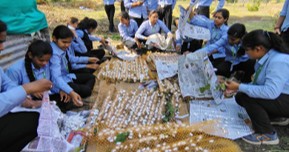
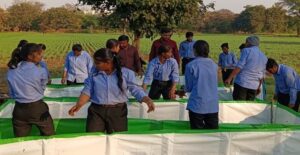
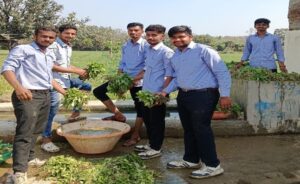
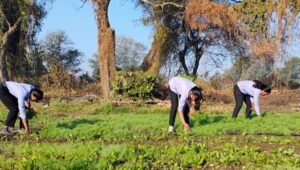
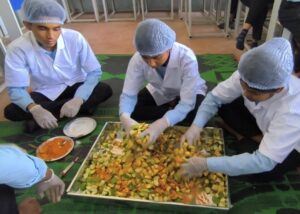
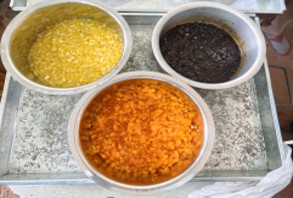
The curriculum combines classroom teaching, laboratory practical’s, field demonstrations, experiential learning, and rural agricultural work experience (RAWE).
Skill Enhancement Courses
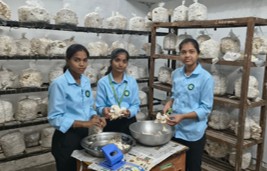
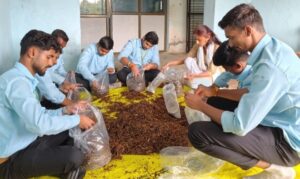
Skill Enhancement Courses are offered by a college as module of complementing courses to help the student to achieve skill in a specific area of his interest. The student can select these courses from a basket of skill enhancement courses as indicated below
Vermicompost Production | Mushroom Production Technology |
Commercial Vegetable Production | Seed Production Technology |
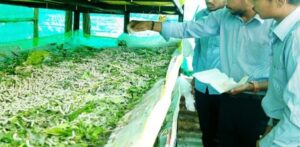
Commercial Sericulture | Post Harvest Processing Technology |
Horticulture Nursery Management | Video Production Technology |
Dairy Management | Poultry Production Technology |
Online Courses
The online courses of 10 credits are offered to allow the students to groom their passion or strengthen their knowledge and competency in any field beyond prescribed courses. The students can register online courses of any field such as Basic Sciences, Humanities, Commerce, Business
Management, Languages including foreign language, Communication skills, Music, etc through
SWAYAM, Diksha, NPTEL, mooKIT, edX, Coursera, or any other portal.
Student READY Programme
The Student READY (Rural Entrepreneurship Awareness Development Yojana) programme provides practical exposure through:
- Experiential Learning
- Rural Agricultural Work Experience (RAWE)
- Agro-Industrial Attachments
- Skill Development Training
- Agribusiness Exposure
Mandate
To impart quality agricultural education through modern teaching methodologies.
To conduct need-based research for solving regional agricultural problems.
To transfer agricultural technologies to farmers through extension activities.
To develop competent agricultural graduates and entrepreneurs.
To promote sustainable and climate-resilient agriculture.
Infrastructure
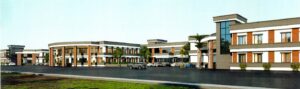
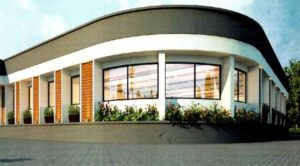
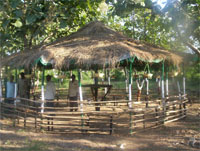
As the college is at establishment stage, the development of infrastructure facilities is in progress. The details are given below, Academic Facilities : Smart Classrooms, Seminar Halls, Examination hall, Computer Laboratory, E-Learning Facilities, Audio-Visual Teaching Aids etc. Modern laboratories support practical learning and research activities. Library The Central Library provides: Agricultural textbooks, National and international journals, E-books and digital resources, Thesis and dissertations, Reference materials and Newspaper. Hostel Separate hostel facilities for boys and girls with essential amenities. Agricultural colleges typically provide residential facilities to support academic and extracurricular development. Sports Complex All the sport facilities along with grounds for Cricket, Volleyball, Kho kho, Archery, Fencing Kabaddi, Athletics and Indoor Games. Auditorium Modern auditorium for seminars, conferences, cultural programmes, and guest lectures. Wi-Fi Campus Internet-enabled campus supporting digital learning and research activities. Instructional Farm The college instructional farm is under development which provides hands-on training in Crop production, Seed production, Irrigation management, Farm mechanization, product testing, Demonstration trials, crop cafeteria, commercial vegetable , flower productiomn and Fruit Orchards. | 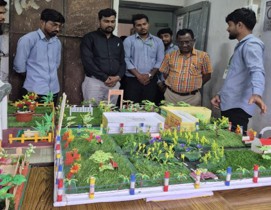 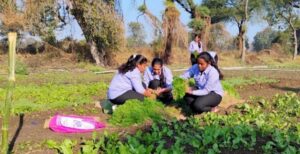 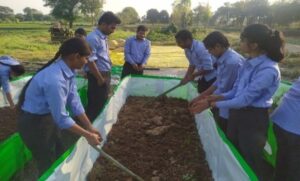 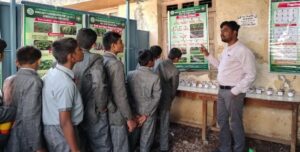 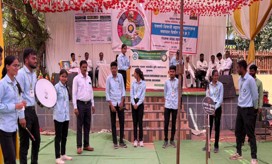 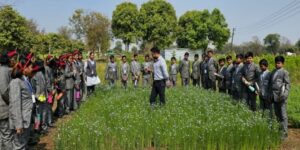 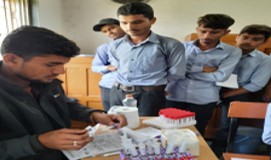 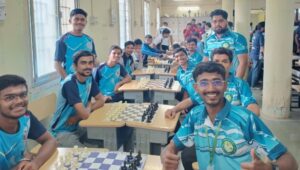 |
 |  |  |
Hostel Building


Girls Hostel Boys Hostel
Sports Complex
Sports and Gymnasium Facilities
Canteen |
Sports Complex |

Co-Curricular Activities
- NSS
- Sports and Games
- Cultural Programmes
- Debate and Elocution Competitions
- Agricultural Exhibitions
- Youth Festivals
Student Clubs
- Students Competitive Forum
- Innovation and Entrepreneurship Cell
 |  |  |
Research Activities
The faculty members are involved in research activities along with responsibilities of teaching and extension work spares comparatively less period for research activity. However, few faculties are involved in some basic research with the help of PG students from respective disciplines.
Extension Activities
The faculty members of the college are actively involved in the extension activities by visiting the farmers field, radio talks, TV programme, published popular articles, social media groups for the benefit of the farming community. The faculty members are acting as resource person in the Training, Krishi Melawa, Krishi Charcha Satra and Krishi Din organized by the college and the Krishi Vigyan Kendra etc.
Educational Tours
The educational tours for B.Sc. (Agri.) students are arranged every year. The aim of the educational tours is to provide platform for the students to get acquainted with the practical knowledge and aspects of agriculture and allied sectors in other parts of country.
Contact Information
Dr. Pramod K Wakle
Associate Dean
Bhausaheb Fundkar Government College of Agriculture, Sagwan, Buldhana
Dist. Buldhana – 443002 Maharashtra, India
Email : adcoabuldhana@pdkv.ac.in